


































































Fire Equipment Mounting & Positioning Requirements
Correct positioning of fire safety equipment is essential to ensure it can be accessed quickly and safely during an emergency. In New Zealand, the installation of fire extinguishers, fire blankets, and fire hose reels is guided by NZS 4503:2005, which outlines best practice for equipment placement, accessibility, signage, and ongoing maintenance. The information below provides a practical overview of these requirements to help ensure your fire protection equipment is installed correctly and ready when it’s needed most.
Fire Extinguisher Mounting & Positioning FAQs
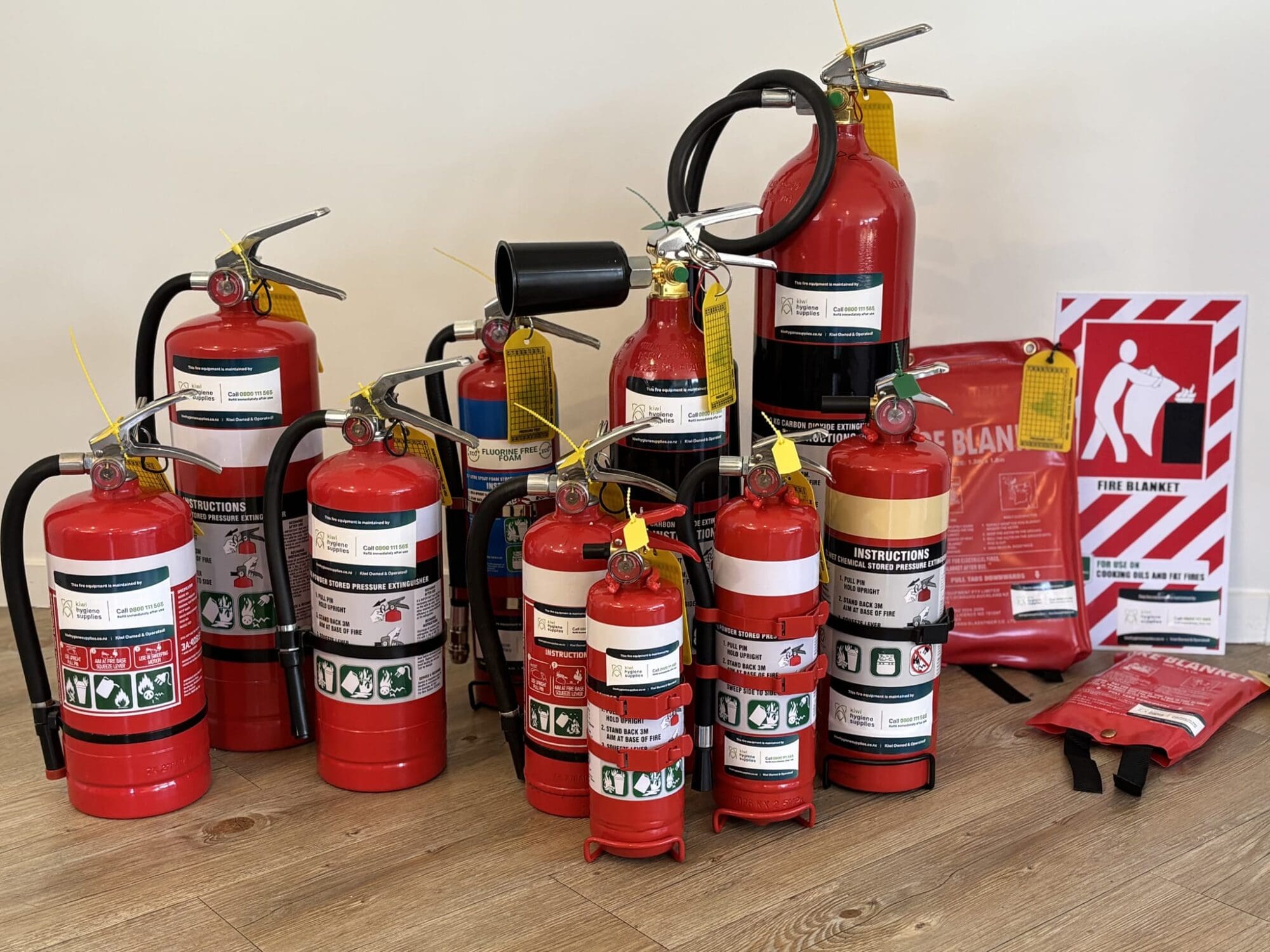
Under NZS 4503:2005, fire extinguishers in New Zealand must be positioned so they are readily accessible, visible, and suitable for the fire hazards present in the area. The standard covers the selection, installation, distribution, signage, and maintenance of extinguishers.
Fire extinguishers must be:
- Installed in conspicuous and accessible locations
- Positioned along escape routes and near exits
- Located close to identified fire hazards, but not so close that access would be blocked by the fire
- Mounted on brackets, cabinets, or stands — not left loose on floors
- Protected from damage or obstruction
- Clearly identified with compliant signage visible from normal approach paths
The extinguisher type must match the hazard:
- CO₂ near electrical switchboards/equipment
- Wet chemical near commercial kitchens
- Foam or dry powder near flammable liquids
- Water extinguishers for ordinary combustibles
Distribution requirements:
- Extinguishers must be arranged so occupants do not need to travel excessive distances to reach one.
- Larger or higher-risk buildings require additional units based on hazard classification and floor area.
Visibility and access:
- Equipment must remain unobstructed at all times.
- Cabinets or recessed installations require clear signage.
- Extinguishers should be easy to remove quickly during an emergency.
Height and mounting:
- NZS 4503 requires secure mounting suitable for easy access and operation.
- Industry practice is commonly around handle height of approximately 1–1.2 m above floor level depending on extinguisher size.
Special areas:
- Kitchens, workshops, plant rooms, fuel storage areas, and electrical rooms generally require dedicated extinguishers appropriate to those hazards.
- Multiple extinguisher types may be required in mixed-risk environments.
Fire Blanket Mounting & Positioning FAQs
Under NZS 4503:2005, fire blankets in New Zealand must be positioned so they are immediately accessible, clearly identified, and suitable for the fire risk area they protect. The standard applies to both domestic and commercial installations.
Fire blankets must be:
- Installed in a readily accessible location
- Positioned along normal travel paths or near exits
- Located close enough to cooking or fire-risk areas for quick use, but not directly above the hazard where flames could prevent access
- Mounted securely in their quick-release container or cabinet
- Kept unobstructed at all times
In kitchens and cooking areas:
- Fire blankets are typically installed near cooking appliances where small cooking-oil or fat fires may occur
- They should be positioned so a person can reach them without leaning over a burning stove or fryer
Signage requirements under NZS 4503:
- A compliant fire blanket sign (blazon) must be installed
- The sign should be clearly visible from normal approach directions
- Signage is generally mounted at least 2 metres above floor level
- Typical minimum sign size is 400 mm × 200 mm
- Signs are normally red and white for visibility
Maintenance and accessibility:
- Fire blankets must remain in their protective sleeve or container until use
- They must be protected from grease, oil contamination, and physical damage
- Once used, the blanket must be replaced
- Annual inspection is recommended in accordance with NZS 4503
Common installation locations:
- Domestic kitchens
- Commercial kitchens
- Staff lunchrooms
- Workshops or areas where clothing fires or small contained fires may occur
Fire Hose Reel Mounting & Positioning FAQs
Under NZS 4503:2005, fire hose reels in New Zealand must be positioned to provide effective first-response firefighting coverage while remaining safe, visible, and easily accessible to building occupants. The standard covers the selection, installation, distribution, signage, and maintenance of hose reels and other hand-operated firefighting equipment
Fire hose reels must be:
- Installed in readily accessible and visible locations
- Positioned along normal exit or escape routes
- Mounted where they do not obstruct movement or create hazards
- Installed so the hose can be deployed quickly and safely in an emergency
Coverage requirements:
- Hose reels must be located so the hose stream can effectively reach all protected areas of the building.
- Additional hose reels may be required in larger buildings or where obstructions limit hose reach.
- Typical hose lengths range from approximately 18–36 metres depending on the installation.
Placement considerations:
- Hose reels should be positioned close to exits or circulation paths so users can retreat safely while operating them.
- They should not be located where fire could block access to the reel.
- Space around the reel must remain clear so the reel and hose can swing and deploy freely.
Mounting requirements:
- Hose reels must be securely fixed to walls, cabinets, or swing-arm assemblies.
- Installations must allow unrestricted hose withdrawal and rewinding.
- Swing-arm reels are commonly used where directional access is required.
Signage:
- Hose reels must be clearly identified with compliant fire equipment signage.
- Signage must remain visible from normal approach paths and not be obscured by doors, shelving, or stored goods.
Water supply and operation:
- Hose reels must be permanently connected to a suitable water supply.
- Systems are generally designed to provide a continuous controllable water stream for Class A fires such as paper, wood, textiles, and plastics.
Maintenance and accessibility:
- Equipment must remain fully operational and ready for immediate use at all times.
- Hose reels require routine inspection and annual servicing under NZS 4503.

